
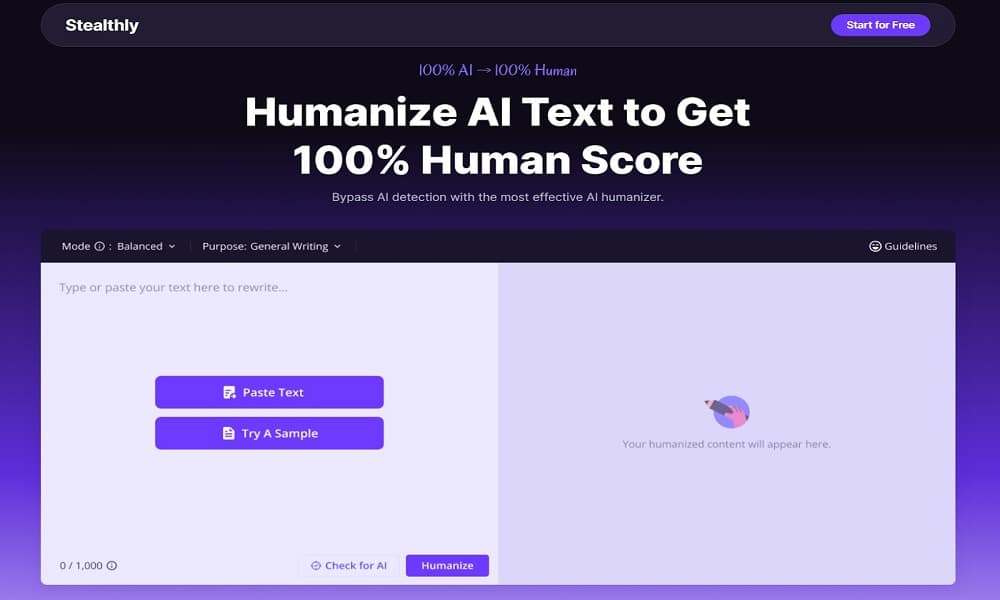
Artificial Intelligence (AI) has become an essential part of the digital world. From content creation to SEO strategies, AI tools save time and boost productivity. However, one challenge remains: AI-generated content often sounds robotic, repetitive, or unnatural. That’s where the concept of humanizing AI comes in.
If you run a business or offer SEO services, like we do at SEO Hub, understanding how to humanize AI is crucial for building trust with your audience, improving engagement, and ranking higher on search engines. In this article, we’ll dive deep into what “humanize AI” means, why it matters, and how you can apply it to your website and marketing strategies.
What Does “Humanize AI” Mean?
“Humanize AI” refers to the process of making AI-generated text, images, or interactions feel more natural, relatable, and authentic to humans. Instead of sounding like a machine, humanized AI communicates in a way that reflects real human tone, emotions, and intent.
For example:
- Non-humanized AI: “Buy SEO services today. SEO services improve rankings. Rankings help websites succeed.”
- Humanized AI: “Looking to boost your online presence? Our SEO services are designed to help your website climb search rankings and attract more customers effortlessly.”
See the difference? The second example feels more personal, engaging, and professional.
Why Humanizing AI Matters in SEO
Search engines, especially Google, prioritize helpful, user-focused content. In fact, Google’s Helpful Content Update specifically targets AI-generated or low-quality content that adds little value.
Humanizing AI content helps in several ways:
- Better User Experience – Readers connect with content that feels authentic and easy to understand.
- Improved SEO Rankings – Human-like content aligns with Google’s EEAT (Expertise, Experience, Authoritativeness, Trustworthiness) guidelines.
- Higher Engagement – Articles written in a human tone reduce bounce rates and increase time on site.
- Trust Building – Authentic-sounding content builds credibility with your audience.
For SEO agencies like SEO Hub, mastering AI humanization means creating content that not only ranks but also converts.
Key Elements of Humanized AI Content
To humanize AI effectively, you need to focus on several important factors:
1. Tone and Style
AI tools often use a formal or repetitive style. Humanizing means adjusting the tone—casual, professional, or conversational—depending on your audience.
2. Storytelling
People relate to stories more than dry facts. Adding anecdotes, case studies, or relatable examples makes AI content feel more natural.
3. Emotional Connection
Human writing includes empathy and emotion. Phrases like “We understand your challenges” or “Imagine this scenario” create engagement.
4. Context Awareness
AI sometimes produces generic output. Humanizing involves tailoring content to your niche, audience, and real-world situations.
5. Editing and Refinement
The most important step—never publish raw AI output. Always edit, restructure, and polish content to match your brand’s voice.
Practical Tips to Humanize AI Content
If you’re using AI tools like ChatGPT, Jasper, or Writesonic, here are practical tips to make your content sound more human:
1. Start with Clear Prompts
The better your input, the better the output. Instead of vague prompts, be specific:
- Bad prompt: “Write an article about SEO.”
- Good prompt: “Write a 2000-word article on local SEO strategies for small businesses, using a friendly and informative tone.”
2. Add Human Edits
Review the AI’s draft and change robotic phrases, repetitive sentences, or unnatural wording.
3. Inject Personality
Use humor, rhetorical questions, or conversational phrases like “Here’s the truth” or “Let’s break it down.”
4. Use Real Examples
Reference real-world SEO strategies, case studies, or industry stats to add depth and authenticity.
5. Vary Sentence Structure
AI often writes uniform sentences. Mix short, punchy lines with longer, detailed explanations.
6. Optimize for SEO Without Overstuffing
AI tends to overuse keywords. Balance your keywords naturally across headings, meta descriptions, and body content.
Tools to Help Humanize AI Content
Several tools and techniques can help make AI-generated content more human-friendly:
- Grammarly or ProWritingAid – For grammar, tone, and clarity adjustments.
- Quillbot – For paraphrasing robotic AI sentences into more natural text.
- Hemingway App – To simplify complex sentences and improve readability.
- Surfer SEO – Ensures your content is SEO-optimized while sounding human.
At SEO Hub, we combine AI with these tools plus manual editing to deliver professional, engaging SEO content.
Humanize AI in SEO Writing: Step-by-Step
Let’s walk through how you can humanize AI content for SEO purposes:
- Research First – Gather keywords, competitor insights, and audience pain points.
- Generate AI Draft – Use AI to save time, but keep it as a first draft only.
- Edit for Tone – Adjust sentences to fit your audience’s voice.
- Add SEO Elements – Incorporate keywords, headings, meta tags, and internal links naturally.
- Polish for Readability – Break text into short paragraphs, add bullet points, and include examples.
- Add Human Touch – Share experiences, insights, or expert commentary.
Benefits of Humanizing AI for Businesses
When businesses humanize AI in their marketing and SEO efforts, they enjoy multiple benefits:
- Stronger Brand Identity – Humanized content reflects your brand’s unique personality.
- Better Conversion Rates – Customers trust content that feels authentic.
- Time and Cost Efficiency – AI handles bulk work, while human editing ensures quality.
- Competitive Advantage – While others publish raw AI content, you stand out with polished, engaging content.
For example, at SEO Hub, we’ve seen client websites gain 30–40% higher engagement when AI content was humanized versus when it was published directly.
Humanize AI Beyond Text
Humanization isn’t limited to text content. It applies across multiple areas:
1. Chatbots & Customer Support
Instead of robotic replies, customer service bots should use empathy-driven, personalized responses.
2. Email Marketing
AI can draft emails, but humanizing them ensures they don’t sound spammy or generic.
3. Social Media Posts
AI tools can suggest posts, but adding humor, trending references, and authentic captions makes them more engaging.
4. Visual Content
AI-generated images can be humanized by aligning them with brand style, emotions, and storytelling.
Challenges in Humanizing AI
While humanizing AI has clear benefits, it’s not without challenges:
- Time Investment – Editing AI drafts still takes significant effort.
- Risk of Plagiarism – AI may unintentionally copy existing content. Always check originality.
- Tone Consistency – Maintaining a consistent voice across all AI outputs requires oversight.
- Over-Reliance on AI – Businesses must balance automation with creativity.
At SEO Hub, we recommend using AI as an assistant, not a replacement for human creativity.
The Future of Humanized AI in SEO
The future of SEO will involve even deeper integration of AI, but with a strong emphasis on human-first content. As search engines get smarter, raw AI content will be easier to detect.
Brands that focus on humanizing AI will:
- Build stronger trust with users.
- Outrank competitors using raw AI content.
- Deliver a more personalized digital experience.
The winning formula will be AI + Human Creativity = SEO Success.
Conclusion:
AI is a powerful tool, but raw AI-generated content often lacks personality, empathy, and authenticity. To succeed in SEO and digital marketing, businesses must humanize AI—making content sound natural, engaging, and relatable.
At SEO Hub, we specialize in combining AI efficiency with human creativity to deliver SEO services that rank and resonate. By humanizing AI, you can build trust, connect with your audience, and achieve sustainable online growth.
FAQs About Humanizing AI
Q1: Can Google detect AI-generated content?
Yes, Google can detect patterns in AI-generated text. Humanizing AI helps avoid penalties and improves ranking.
Q2: How do I humanize AI content quickly?
Use editing tools, adjust tone, and add personal insights. Never publish AI output directly.
Q3: Does humanized AI content perform better in SEO?
Absolutely. It reduces bounce rates, improves engagement, and aligns with Google’s helpful content guidelines.
Q4: Should I stop using AI completely?
No. AI is a time-saving tool. The key is combining AI efficiency with human editing.
Q5: Can SEO Hub help humanize AI for my business?
Yes! We offer SEO content services that use AI smartly and ensure every piece of content sounds authentic and professional.








Comment (1)
001winbr1
Just checked out 001winbr1. Seems like a decent spot to try my luck. Fingers crossed! 001winbr1